Our 5 most used drones
Our 5 most used drones
What we use and why
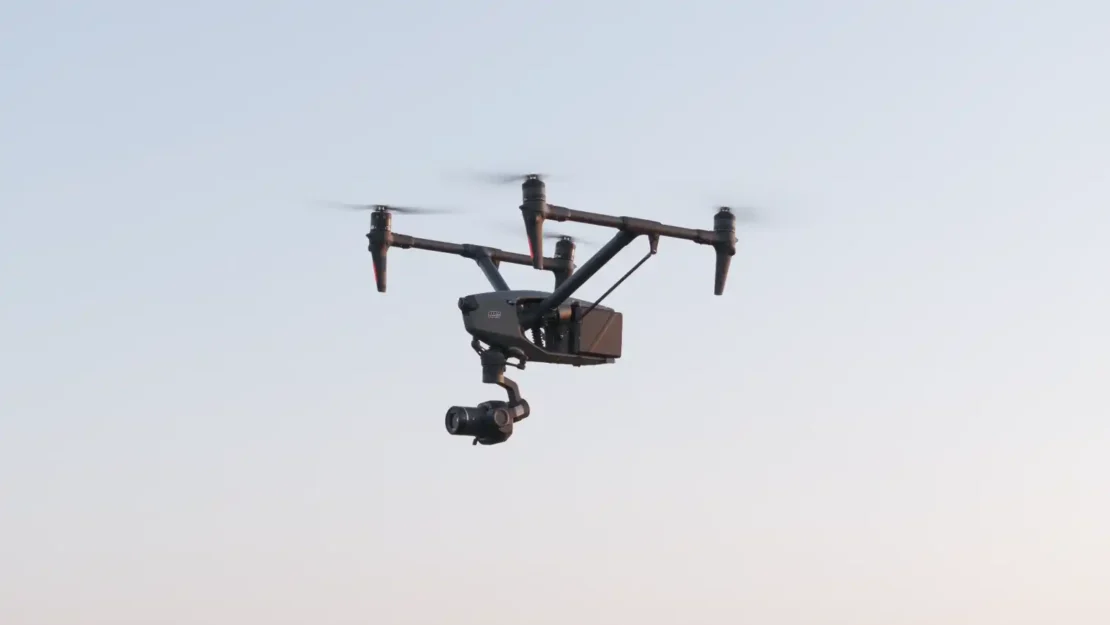
1: The Cinematic King - DJI Inspire 3
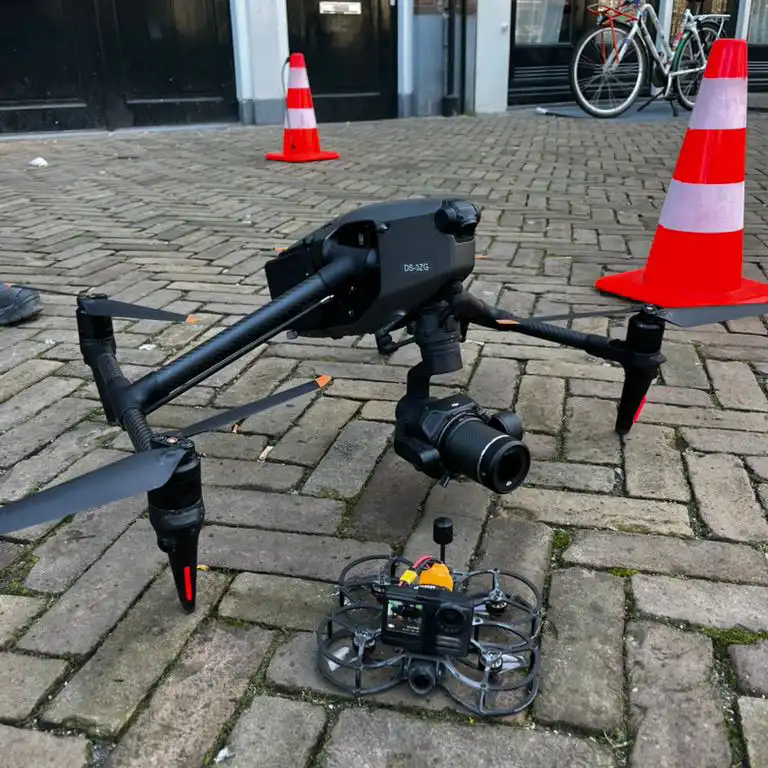
For creative shots that demand high quality, the DJI Inspire 3 is our flagship. We owe this to the full-frame camera with interchangeable lenses. This allows us to switch between our 18, 24 & 35mm wide-angle lenses for expansive, sweeping overview shots, or our 50, 75 & 90mm lenses to focus on a specific subject.
Additionally, the main camera can rotate freely by 360 degrees while the drone flies forward, making a dual-operator setup possible. In this setup, the pilot focuses entirely on the flight path and safely avoiding obstacles. At the same time, the camera operator has complete freedom to move the main camera. This not only ensures tighter footage but also increases safety. The Inspire 3 is equipped with a Zenmuse X9 camera featuring 8K video quality and has a flight time of approximately 25 minutes.
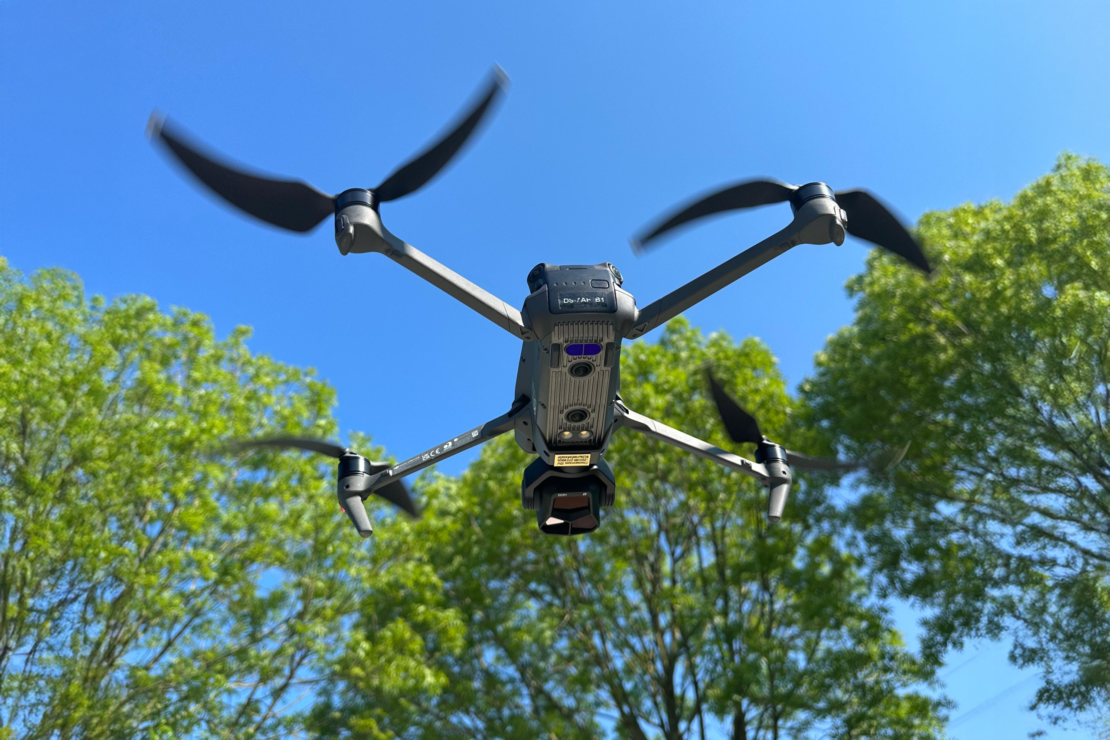
2: The Flexible - DJI Mavic 3 Cine Pro
Sometimes there is little space to fly a large drone, but you still want to capture high-quality, professional footage. For moments like these, we deploy the DJI Mavic 3 Cine Pro. This is a compact drone that can get airborne quickly, making it perfect for jobs where space is limited, such as urban areas. Another major plus is its low weight of less than a kilogram. This offers opportunities to fly closer to people and buildings. It delivers 5.1K footage at 50 fps and has a flight time of roughly 43 minutes.
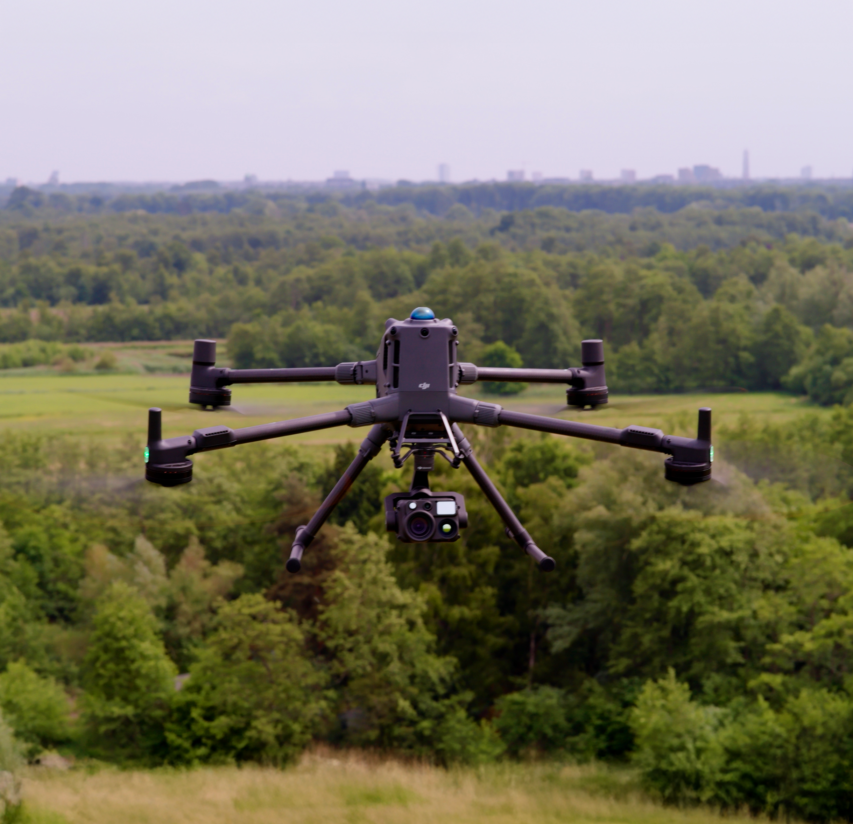
3 & 4: The Powerhouses for Inspection - DJI Matrice 350 / DJI Matrice 400
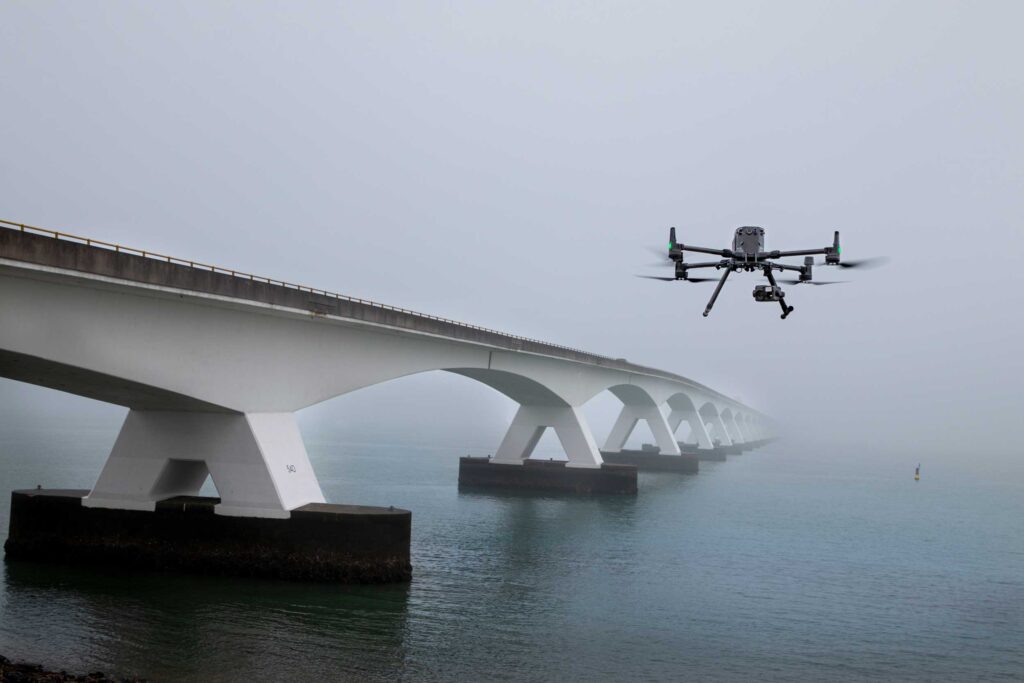
For large inspection jobs, we use both the DJI Matrice 350 and the new Matrice 400. The latter is increasingly taking over from the Matrice 350, as it features better batteries, a higher payload capacity, and new technical gadgets. Yet you might wonder: why do we still keep the Matrice 350 in our arsenal? That has to do with a few crucial mission requirements. Specifically, the Matrice 400 does not have the option for a so-called top mount (a camera or sensor mounted on top of the drone). However, this is essential for us when we need to inspect the underside of bridges, for example.
Furthermore, there is not yet an approved parachute system for the Matrice 400, which is mandatory for some missions. Finally, a slightly smaller drone is often nicer because it produces less noise, which is ideal for local residents. Various sensors can be mounted on both drones. From cameras with razor-sharp optical zoom to thermal cameras and LiDAR systems. The Matrice 350 can fly for about 45 minutes, and the 400 for up to 59 minutes.
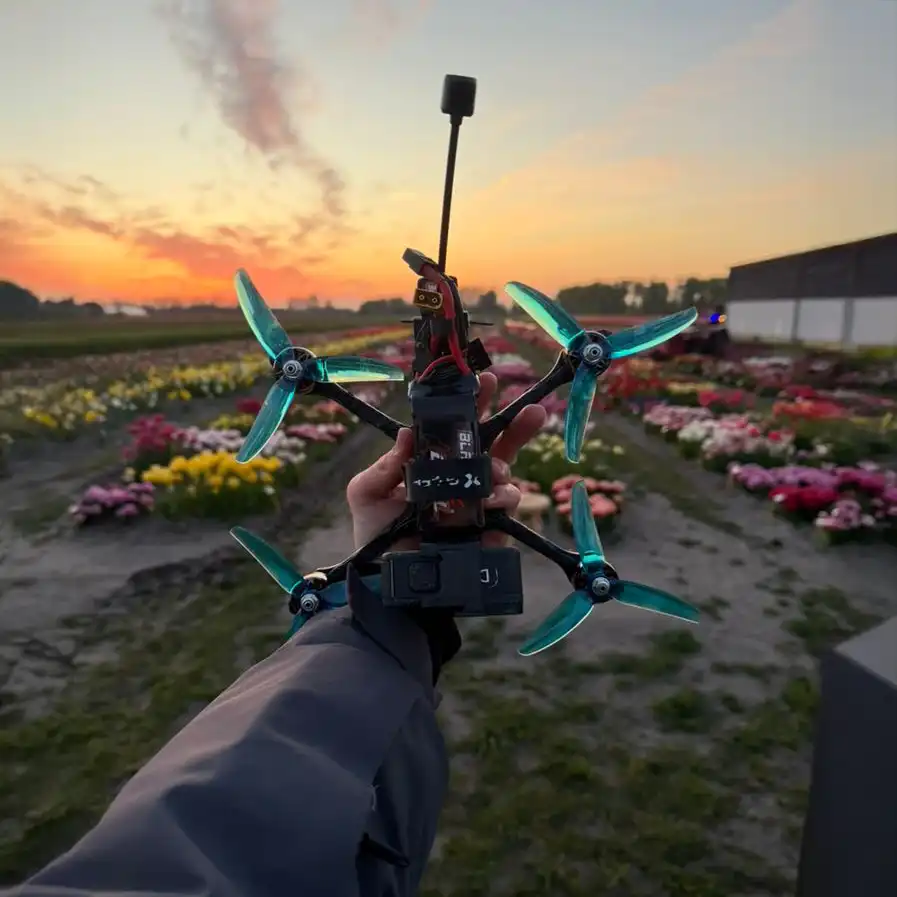
5: The Action Heroes - Custom FPV
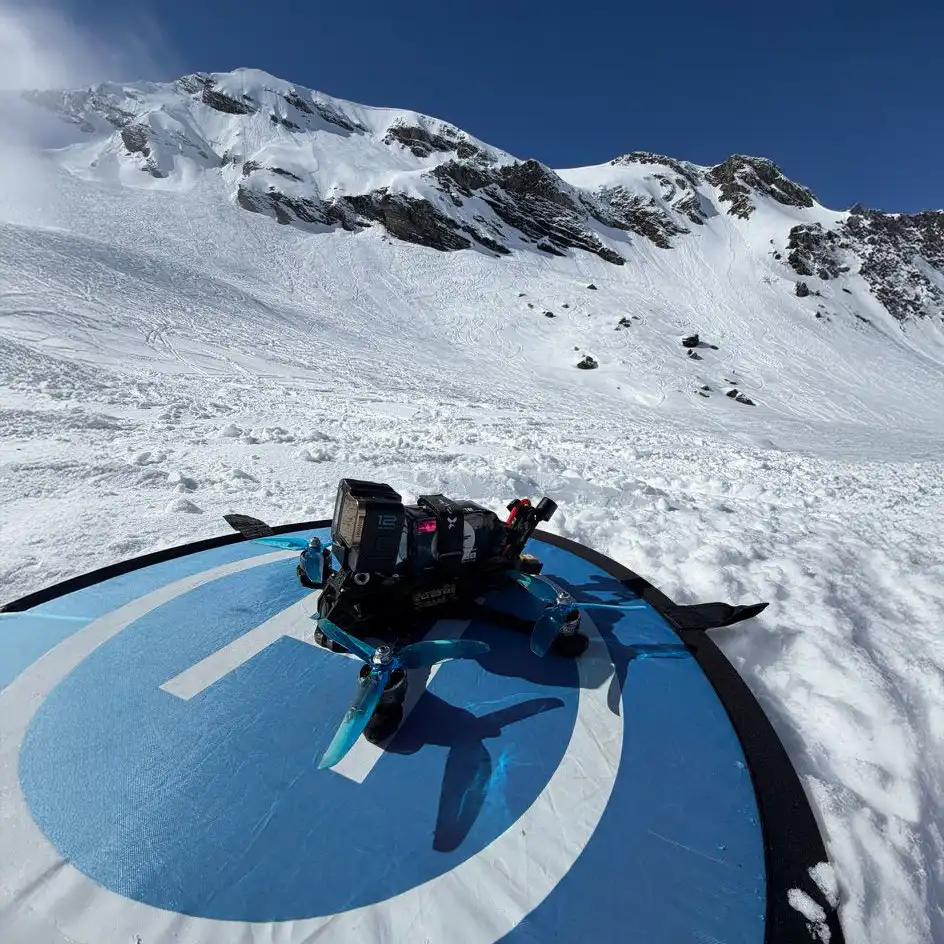
For spectacular action videos where pure speed is central, or for smooth indoor flights, we use custom-built FPV (First Person View) drones. Because the pilot looks directly through the drone’s camera via special video goggles, they can fly with enormous precision and unprecedented agility. Through these FPV images, the viewer gets the feeling of flying along and being right in the middle of the action. The high speed ensures you see a lot in a short amount of time, which immediately builds tension.
We have these drones in both large and small sizes. The large models are meant for heavy cine cameras and can fly at significant speeds, allowing them to effortlessly keep up with cars or athletes. We use the smaller ones for safety, indoor shoots, and flying near people. We can build these custom drones according to the client’s wishes and their specific assignments.
Every job requires its own gear, but the best equipment is nothing without a good pilot. At Zero Gravity, we offer both.
More Academy


Ready for take off?
We are ready to take off for you.